
Basketball is a game of inches, where the slightest defensive misstep can lead to an easy bucket. In the battle between defender and ball handler, on-ball defense becomes a chess match — one where every movement, every choice, can dictate the outcome of a game. One of the biggest dilemmas for defenders is deciding whether to force the ball handler to the middle, into the heart of the defense, or push them toward the baseline, where help may be limited.
It’s a question that has sparked endless debate among basketball purists and coaches alike. Some of the best defensive minds in the game, like Chris Beard and Tony Bennett, have built their systems around these crucial decisions. But what does the data say? According to NBA stats, 72% of dribble penetration resulting in points comes from mistakes in positioning, whether it’s allowing an uncontested drive or failing to properly rotate. The margin for error is slim — which is why mastering on-ball defense is not just about talent, but about strategy.
As we dive into the philosophies of Beard and Bennett, two coaches renowned for their defensive prowess, we’ll explore whether forcing middle or baseline holds the key to locking down your opponent. The answers might just surprise you.
What is On-Ball Defense?
On-ball defense is the art of guarding the player with the ball, aiming to prevent them from making an easy offensive play. It requires a blend of physical skills and mental awareness, as the defender must stay in front of their opponent while anticipating their next move. This is the cornerstone of any effective defense, as breaking down on-ball defense often leads to dribble penetration, which collapses defensive formations and creates easy scoring opportunities.
Key aspects of on-ball defense include footwork, positioning, and anticipation. Good footwork ensures that the defender can stay balanced and move laterally without getting beat off the dribble. Proper positioning — staying between the ball handler and the basket — is essential to cutting off driving lanes. Finally, anticipation allows the defender to react to offensive moves and force the ball handler into uncomfortable situations.
The Debate: Forcing Middle vs. Forcing Baseline
In on-ball defense, one of the biggest strategic decisions is determining whether to force the ball handler toward the middle of the floor or to the baseline. Both approaches come with their own advantages and risks, and choosing between them can shape a team’s entire defensive identity. Let’s explore the pros and cons of each strategy.
Forcing Middle
Advantages Of Forcing Middle:
- Crowd the Lane: Forcing middle funnels the ball handler into traffic, where help defense can collapse, making scoring harder.
- Help Defense: Defenders can rotate quicker from the weak side, cutting off passing lanes and reducing open looks.
Risks Of Forcing Middle:
- Deep Penetration: This approach risks allowing easy drives into the paint if help defense is late.
- Fouls: Collapsing defenders increase the risk of fouls, putting key players in jeopardy.
Forcing Baseline
Advantages Of Forcing Baseline:
- Baseline as a Defender: The baseline acts as an extra defender, limiting the ball handler’s space and options.
- Funnel into Help: Forces the offense toward help in the corner, leading to traps or turnovers.
Risks Of Forcing Baseline:
- Open Corner Shooters: Forcing baseline can leave shooters open for high-percentage corner threes.
- Rotation Breakdowns: If rotations aren’t quick, it can create gaps for easy drives or passes.
Chris Beard’s Defensive Philosophy
Chris Beard is renowned for his defensive prowess, having built a reputation as one of college basketball’s top defensive minds. His coaching career includes successful stints at Texas Tech, where he led the team to the NCAA Championship game in 2019, and at the University of Texas. Beard’s defensive strategies are characterized by intense pressure and a deep understanding of defensive principles.
Beard’s Approach to On-Ball Defense
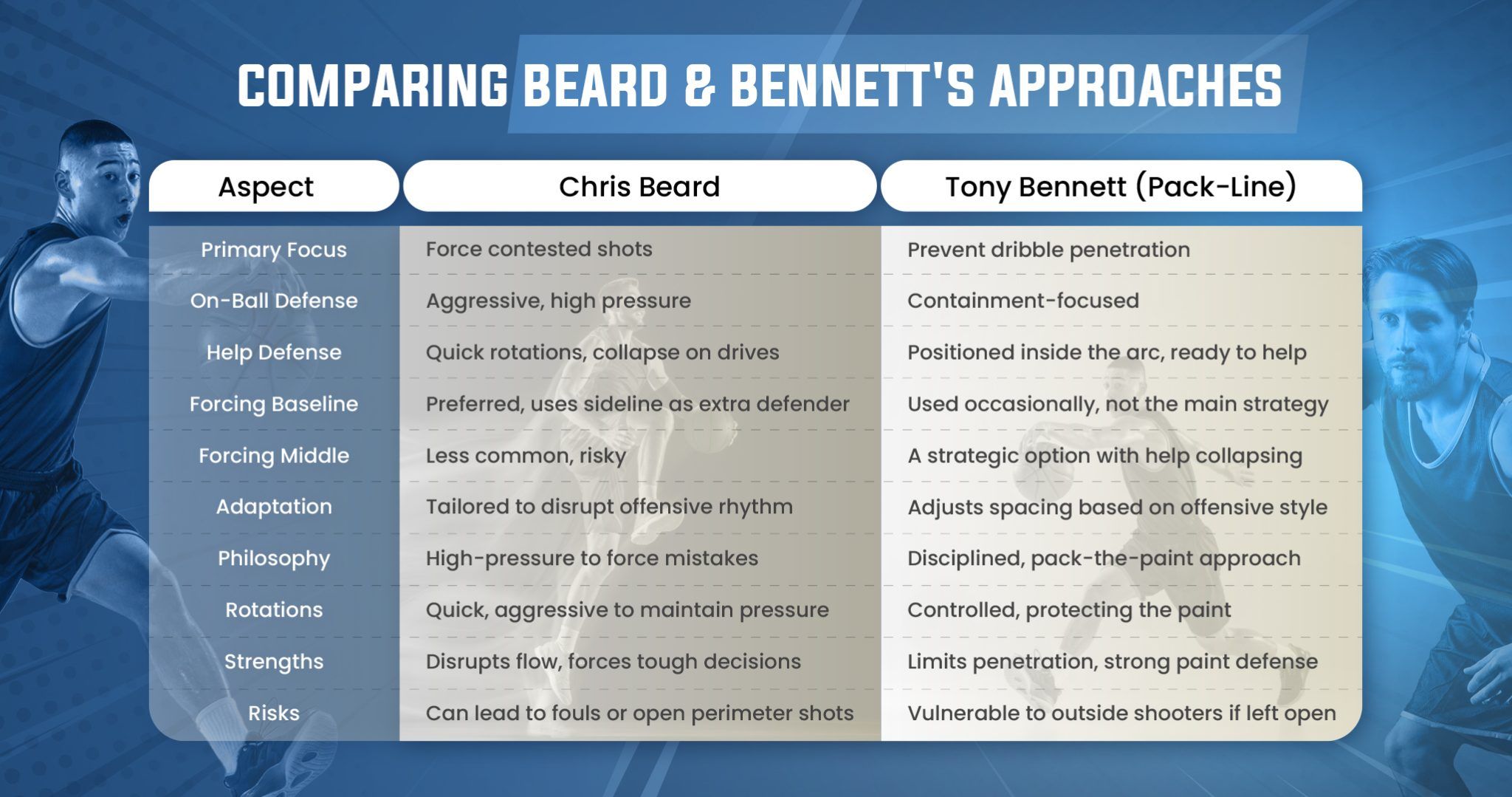
Beard’s primary goal in on-ball defense is to force the offensive player into tough, contested shots. His defensive schemes emphasize relentless pressure, staying low, and maintaining a strong stance to disrupt the ball handler’s rhythm. Beard is known for his use of help-side defense and rotations, which complement his on-ball defense. When the ball handler is pushed toward help defenders, Beard’s system focuses on quick, coordinated rotations to close off passing lanes and contest shots effectively.
Chris Beard has a notable preference for forcing the ball handler to the baseline. By directing opponents toward the baseline, Beard utilizes the sideline as an additional defender, effectively shrinking the court and limiting offensive options. This approach not only helps in funneling the ball handler into areas where help defense can easily collapse but also minimizes the risk of open shots from the perimeter. Beard’s emphasis on forcing baseline enhances his defensive schemes, making it harder for opponents to penetrate and score efficiently.
Tony Bennett’s Pack-Line Defense
Tony Bennett, head coach of the Virginia Cavaliers, is celebrated for his highly disciplined and structured defensive system, known as the Pack-Line Defense. This system has been a cornerstone of Bennett’s success, including winning the NCAA Championship in 2019. The Pack-Line Defense emphasizes preventing dribble penetration and forcing opponents into tough, low-percentage shots, which has made Virginia consistently one of the top defensive teams in college basketball.
Pack-Line Defense Breakdown
The core concept of the Pack-Line Defense is to “pack” defenders inside an imaginary line a few feet inside the three-point arc. This setup prevents dribble penetration by clogging the lane and daring opponents to shoot from the outside. While one defender pressures the ball handler, the other defenders remain in the pack-line, ready to help and rotate. The system relies heavily on team defense, with all players responsible for preventing easy drives and limiting open looks.
On-ball defense is critical in this scheme. The ball handler’s defender must stay aggressive without overcommitting, trusting that teammates are in position to help if needed. The objective is to funnel the ball into areas where multiple defenders can contest shots, rather than allowing isolation plays.
Forcing Middle and Baseline within the Pack-Line
Within the Pack-Line system, Bennett adapts to the situation, sometimes forcing the ball handler to the middle and other times to the baseline. The philosophy hinges on keeping opponents out of the paint while maintaining defensive balance. When forcing middle, help defense is quick to collapse, cutting off penetration. When forcing baseline, the sideline acts as an extra defender, and the pack-line defense rotates to shut down passing lanes.
Bennett’s system is flexible, allowing for adjustments based on the type of offensive players. Against stronger ball handlers, the defense might shift to more aggressive on-ball pressure, while weaker shooters are often given more space. The key is balancing pressure with containment, forcing the offense into areas where they are less likely to succeed.
Which Strategy is Better?
When it comes to on-ball defense, the choice between forcing middle or baseline depends on several factors, and neither approach is inherently superior.
Factors to Consider
- Opponent’s Strengths and Weaknesses: If the opponent thrives on paint penetration, forcing baseline may reduce their options. Against teams with strong perimeter shooters, forcing middle into help defense might be more effective.
- Team Personnel: The choice also depends on the defensive abilities of your players. If your team has quick, smart help defenders, forcing middle may provide more flexibility. Conversely, teams with strong on-ball defenders may prefer forcing baseline to limit drives and utilize the sideline as an extra barrier.
- Adaptability: A team’s ability to adjust during a game plays a crucial role. Mixing both strategies based on offensive schemes can keep opponents off-balance and reduce predictability.
There’s no one-size-fits-all answer. Both Beard’s and Bennett’s strategies have proven effective in different contexts. The best approach depends on the matchup, team strengths, and how well a team can adapt during play. The debate between forcing middle or baseline in on-ball defense, as exemplified by Chris Beard’s and Tony Bennett’s approaches, highlights the complexity and nuance of defensive strategy in basketball. Both methods have their advantages and drawbacks, depending on the strengths of the team and the opponent. Beard’s aggressive baseline strategy uses the sideline as a natural defender, while Bennett’s disciplined Pack-Line defense thrives on containment and help.
Ultimately, neither approach is definitively better—the key lies in adaptability. The best defenses are those that can adjust based on the situation, blending these strategies to keep the offense guessing and forcing them into tough decisions.
Start refining your game today!